


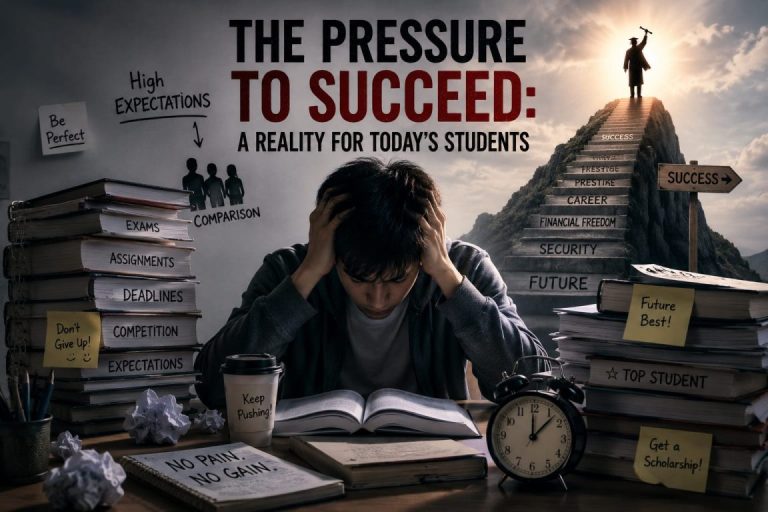
PERSPEKTIFNUSANTARA.COM- Imagine being told that your future depends on every grade, every achievement, and every decision you make before reaching adulthood. For many students today, this is not an exaggeration—it is reality. Success has become more than a personal goal; it has become a social expectation. Students are constantly encouraged to excel academically, build impressive resumes, and prepare for increasingly competitive job markets. While ambition can drive growth and achievement, the pressure to succeed has reached a level that often harms students more than it helps them. In my view, the growing obsession with success has created an unhealthy environment where students are valued more for their achievements than for their personal development and well-being.
The pressure to succeed comes from multiple directions. Families often encourage students to pursue academic excellence because they believe education is the key to a better future. Although these intentions are positive, high expectations can sometimes make students feel that their worth depends on their performance.
Baca juga: Menakar Ulang Tradisi SKS: Mengapa 'Sistem Kebut Semalam' Bukan Lagi Lencana Kehormatan Mahasiswa
At the same time, modern education systems place significant emphasis on measurable outcomes such as grades, test scores, and academic rankings. Students are frequently evaluated through numbers rather than through creativity, critical thinking, or personal growth. As a result, many become focused on achieving results instead of truly understanding and enjoying the learning process.
Social media further intensifies this pressure. Every day, students are exposed to posts celebrating scholarships, awards, internships, and academic achievements. Seeing the successes of others can create the impression that everyone is progressing faster and achieving more. This constant comparison often leads students to feel inadequate, even when they are doing well themselves.
Baca juga: Not Just Grammar: The Challenges of Academic Writing for EFL Students
The consequences of this pressure are becoming increasingly visible. According to the World Health Organization (WHO), anxiety and depression are among the leading causes of illness and disability among adolescents worldwide. Many experts have linked rising mental health concerns to academic stress, social expectations, and uncertainty about the future.