
PERSPEKTIFNUSANTARA.COM– Your friend says something that makes you angry in a WhatsApp chat. You want to respond immediately—and you do. By the time you realize how harsh your message sounds, it’s too late. In our hyperconnected age, communication moves faster than our politeness. Digital platforms have fundamentally changed how we interact: text messages, social media, and online conversations now dominate our daily lives. Yet we continue to apply traditional standards of politeness to modern technology. The result? A digital world where rudeness thrives and respect struggles. The real question is no longer whether digital communication will change politeness—it already has. Instead, we must ask: can we reclaim respect in spaces designed for speed?
The most obvious change is that digital communication has stripped away the nonverbal cues that traditionally signal respect. In face-to-face conversations—whether in Indonesia’s village discussions or formal office settings—politeness is expressed through tone, body language, eye contact, and the pace of speech. A person lowers their voice to show respect, maintains eye contact to show sincerity, or pauses to show they’re listening. Online, these signals vanish. A message arrives as mere text, stripped of voice tone and facial expression. What was meant as gentle criticism reads as harsh judgment. What was intended as a joke appears cruel. Studies from the Indonesian Ministry of Education show that 67% of cyberbullying cases stem from misinterpreted tone in digital messages. This gap between intent and interpretation has made digital communication surprisingly harsh, even when people mean no harm.
A second factor is that digital platforms reward speed over thoughtfulness. Traditional politeness requires deliberation: thinking before speaking, choosing words carefully, and sometimes delivering difficult messages in person. Digital culture does the opposite. Users expect replies within minutes. People type without thinking, hit send without proofreading. This cultural shift—from reflection to reaction—has created an environment where carelessness looks like rudeness. When people prioritize quick responses over careful communication, they inevitably wound others, whether intentionally or not.
Baca juga: Hari Pancasila di Tengah Krisis: Ujian Besar Pemerintahan Prabowo dan Masa Depan Indonesia
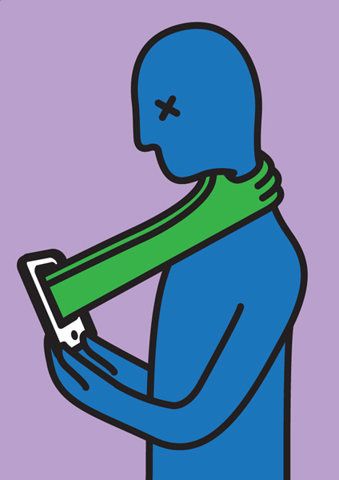
Anonymity and distance have created a new form of cruelty that would be unthinkable face-to-face. People say things online that they would never say to someone’s face. They attack others behind the shield of a screen, often without consequence. In 2023, the Indonesian National Commission on Violence Against Women reported that online harassment increased by 95% compared to the previous year, with social media platforms accounting for 82% of reported incidents. This behavior reveals a troubling truth: politeness is not merely about using polite words. It’s about recognizing the humanity of the person on the other side of the conversation. Digital platforms have made it frighteningly easy to forget that a real human—with feelings and dignity—will read our messages.
Yet digital communication has not only brought decline. It has created new forms of inclusivity that traditional politeness often lacked. Online, people from different social classes, cultures, and economic backgrounds can interact on more equal terms. Traditional politeness frequently reflected power structures: those with higher status received more respect simply because of who they were. Digital spaces have loosened these rigid hierarchies. Online communities have developed their own standards of respect: crediting others’ work, protecting people’s privacy, and supporting vulnerable members. These are new expressions of politeness uniquely suited to digital life.
To address this crisis of digital civility, action must come from multiple directions. Technology companies must redesign platforms to encourage reflection rather than reaction—adding a “pause before sending” feature, for example, or hiding like-and-share counts that incentivize provocative posts. Schools must teach digital literacy alongside traditional manners, helping young Indonesians understand how words harm differently online. Parents must model respectful communication in their own digital behavior. But most importantly, each of us must pause before hitting send and ask a simple question: Would I say this to their face? If the answer is no, then we shouldn’t write it online.
Baca juga: Tantangan Pengawasan Pemilu di Kabupaten Sikka: Belajar dari Pemilu 2019 dan 2024
Digital communication has fundamentally altered how we define and practice politeness. The loss of nonverbal signals, the pressure for instant replies, and the anonymity of online spaces have created an epidemic of disrespect. But politeness is not dead—it is simply sleeping, waiting for us to wake it. We have the power to create new standards of digital courtesy that honor both the speed of modern technology and the dignity of human connection. This is not optional. Every harsh word we type, every moment we spend attacking someone online, every second we prioritize a quick reply over a thoughtful one—these choices shape the digital world our children will inherit. The future of politeness depends not on algorithms or notifications, but on whether we choose, deliberately and consistently, to treat each other with kindness and respect. The technology is not the problem. We are. And only we can fix it.