
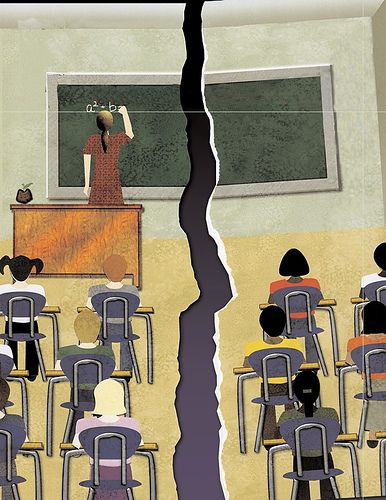
PERSPEKTIFNUSANTARA.COM- Education should provide equal opportunities for every child. However, in Indonesia, the quality of educational infrastructure still depends heavily on where students live. While schools in major cities continue to modernize, many students in remote areas still struggle with damaged classrooms, limited internet access, and shortages of teachers and learning facilities.
Indonesia has made considerable progress in expanding educational access over the past decades. The government has introduced programs such as School Operational Assistance (BOS), teacher certification, and digital learning initiatives. Many schools and universities have also been built in different provinces. Despite these improvements, educational development remains uneven across the country. Students in urban areas such as Jakarta, Bandung, and Surabaya often study in schools with modern facilities, computer laboratories, and reliable internet access. Meanwhile, students in remote provinces, including Papua and East Nusa Tenggara, continue to face serious limitations.
This inequality can be seen in the condition of school infrastructure. According to data from the Ministry of Education, Culture, Research, and Technology, thousands of classrooms in Indonesia are still categorized as damaged. Some schools lack proper sanitation, electricity, and safe learning spaces. One striking case is found in remote parts of Papua, where students must walk several kilometers through forests and mountains just to attend school. In some villages, children study in classrooms with leaking roofs and broken floors. These conditions make learning uncomfortable and reduce students’ motivation.
Baca juga: Is Green Development Truly Sustainable or Merely Symbolic?
Furthermore, the digital divide has become another major challenge. The COVID-19 pandemic clearly exposed unequal access to technology in Indonesia. While students in major cities could participate in online learning through laptops and stable internet connections, many students in rural areas struggled to access digital education. This can be seen in several areas of East Nusa Tenggara, where students had to climb hills or travel long distances to find an internet signal. According to Statistics Indonesia (BPS) in 2023, internet penetration in urban areas remains significantly higher than in rural regions. As a result, many students in disadvantaged areas experienced learning loss during the pandemic.
In addition to infrastructure and technology, the unequal distribution of teachers also contributes to educational inequality. Qualified teachers are often concentrated in urban centers because of better facilities, transportation, and living conditions. Consequently, schools in remote areas frequently experience teacher shortages. Some schools rely on temporary teachers with limited training, while others ask one teacher to teach multiple subjects. This situation affects students’ academic performance and limits their opportunities to compete equally with students from developed regions.
The lack of educational facilities also affects students’ long-term development. Schools without libraries, laboratories, or extracurricular activities cannot fully support students’ creativity and practical skills. Science education, for example, becomes difficult when schools lack laboratory equipment. Similarly, limited access to books and technology reduces students’ opportunities to improve literacy and digital skills. According to UNESCO, educational inequality often contributes to broader social and economic inequality. Students who receive poor-quality education may face difficulties accessing higher education and stable employment in the future.
To address these challenges, the Indonesian government has launched several policies aimed at improving educational quality. School rehabilitation programs, internet expansion projects, and teacher distribution policies have been introduced in recent years. The “Merdeka Belajar” policy also seeks to improve learning flexibility and encourage innovation in education. However, implementation remains inconsistent across regions. Some local governments have successfully improved educational services, while others continue to struggle with limited budgets, weak management, and inadequate supervision.