
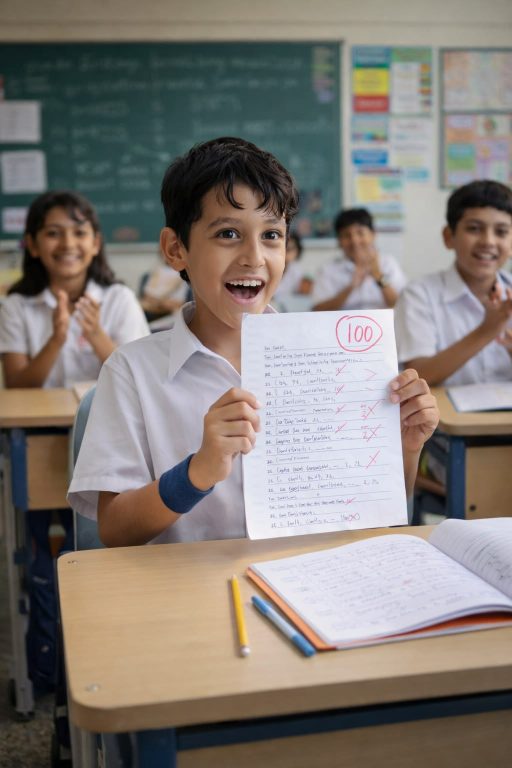
PERSPEKTIFNUSANTARA.COM- Education is the cornerstone of developing high-quality human resources; however, the current education system prioritizes numerical grades over the development of skills needed in real-life situations. The reality today is that most students are competing to get high grades because grades are seen as the key to success. Yet, behind all of this, grades are merely numbers. This is because what should be developed to support education are skills—such as critical thinking, communication, creativity, and a broad perspective. Consequently, an excessive focus on grades has caused schools to fall short in honing students’ skills.
According to data from the Programme for International Student Assessment (PISA) 2022 published by the OECD, Indonesia scored an average of 359 in mathematics, 371 in reading, and 398 in science. Meanwhile, the average for OECD countries was 472 in mathematics, 476 in reading, and 485 in science. This significant gap indicates that many Indonesian students struggle to apply their knowledge to solve real-world problems rather than merely memorizing subject matter.
This fact indicates that academic achievement in educational institutions does not necessarily reflect students’ ability to think critically and resolve real-world conflicts. Many students are capable of earning good grades on exams but may not be able to apply their knowledge or communication skills in daily life. This occurs because some educational systems still tend to emphasize numerically based academic achievement over the development of competencies.
Baca juga: Hari Pancasila di Tengah Krisis: Ujian Besar Pemerintahan Prabowo dan Masa Depan Indonesia
Therefore, schools need to change their approach to learning by focusing not only on academic achievement but also on the comprehensive development of students’ skills. Teachers and school administrators can create a learning environment that encourages students to think critically, collaborate, communicate, and be creative through various active and contextual learning activities. With a balance between grades and skills, students will not only succeed in formal education but will also be well-equipped to face the challenges of the workplace, social life, and an increasingly complex world. Thus, the true goal of education—to shape intelligent, competent, and principled individuals—can be optimally achieved.
Klik link ini untuk mendapatkan informasi terbaru hanya di PerspektifNusantara.com.
Baca juga: Tantangan Pengawasan Pemilu di Kabupaten Sikka: Belajar dari Pemilu 2019 dan 2024